Second time lucky: Dakshana’s ‘dropper’ programme gives hope to gifted students
Many talented students fare poorly in JEE and NEET exams because they cannot afford private coaching. The Dakshana Foundation ensures that they do not miss out on a future they deserve.
Students aspiring to engineering careers are officially allowed just two attempts at the nationwide Joint Entrance Exam or JEE. Second chances are not to be taken lightly – Sandesh Dange knows this well.
Sandesh grew up attending the local primary school in his village in Madhya Pradesh’s Ashoknagar district. Up till Class 5, he didn’t think his future would be any different from his brother’s, who took up small-scale farming after school, just like their father. But in Class 6, he managed to get admission into his district’s Jawahar Navodaya Vidyalaya, one of 661 prestigious Navodaya schools run by the central government for academically talented children from rural and low-income backgrounds.
Suddenly, Sandesh had access to free, accelerated education in a residential school, with other high-achieving students as his peers. He allowed himself to dream bigger. By the end of Class 10, he knew he wanted to study computer science at an Indian Institute of Technology, ideally at IIT-Delhi.
This would require rigorous preparation for the JEE, but private coaching classes were out of the question – they could cost up to Rs 1.5 lakh a year for tuition alone. As a Navodaya student, he had one more option: appearing for the Navodaya CoE Selection Test, conducted by the non-profit organisation Dakshana Foundation. The NCST selects the most gifted students from the Navodaya system to enrol in its Centres of Excellence (CoE), where they receive intensive coaching, free of cost, for the JEE and NEET (medical entrance) exams throughout Class 11 and 12.
In the 19 years since Dakshana was founded, an impressive 80% of its 9,203 students have cleared the JEE and NEET. Of these, 3,770 managed to secure admission in the IITs, 1,388 got into NITs and 2,185 got seats in AIIMS and other government medical colleges. Dakshana would have been Sandesh’s most promising ticket to IIT-Delhi.
That year, however, Sandesh was called home to attend to a family emergency, and missed the Dakshana test. With a heavy heart, he decided to attempt the JEE anyway, even if it meant he had no help apart from his regular Class 11 and 12 lessons at Navodaya. He was unsurprised when he ended up with a poor JEE rank in June 2025. “Self-study for JEE is very difficult,” he explained. “You have no sense of direction, no way to clarify doubts, and a lot of distraction, because very few other students around you are preparing for the same test.”
Sandesh might have packed away his IIT dream had Dakshana not offered him a new, unexpected lifeline at the end of Class 12. He could now appear for the Joint Dakshana Selection Test, conducted specifically for students like him – talented JEE and NEET aspirants from low-income backgrounds, who had received no coaching for their first test attempt but deserved a second chance.
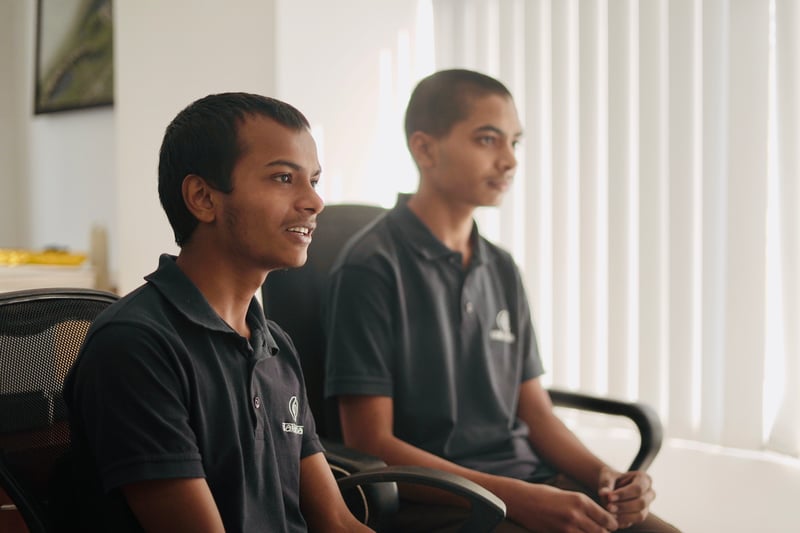
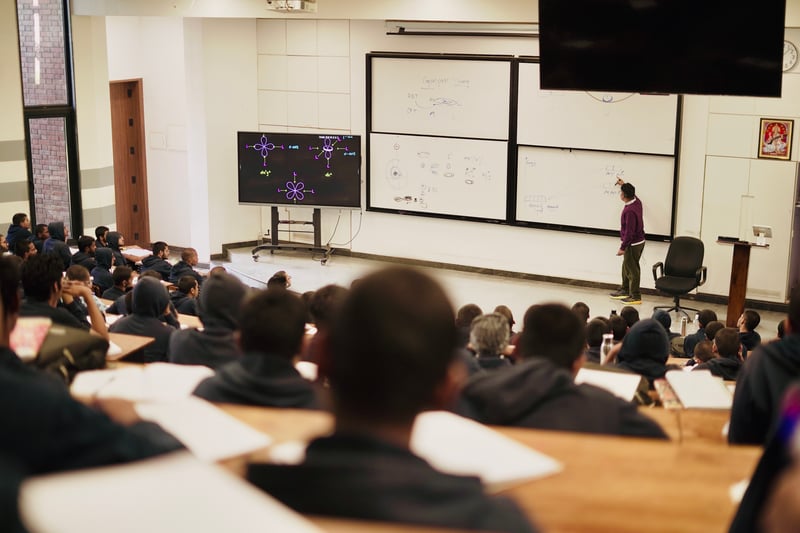
This time, Sandesh seized the opportunity, cleared the selection test and made it to Dakshana Valley – a sprawling 110-acre campus in Maharashtra’s Pune district where 600 “dropper batch” students (those taking an extra or drop year in their academic journeys) are housed for a year and trained for their entrance exams.
“The whole atmosphere is completely different from what I had last year,” Sandesh said. “The teachers are excellent, we have a lot of help outside class too, and everyone is focused on studying. This time, I’m confident I’ll get into IIT.”
A level-playing field
Establishing a specialised centre for second-time aspirants is an extension of Dakshana’s founding belief that education is the most powerful tool to alleviate poverty, and that poverty must never become an obstacle in the pursuit of educational excellence.
Founder Mohnish Pabrai, who also runs an investment funds company, felt particularly strongly about education for gifted children from socio-economically disadvantaged households. These are children with high potential to succeed in their careers, alter the fortunes of their families and impact society at large – if only their natural talents are given access to support and opportunity. Institutions like the Navodaya schools offer such support to academically intelligent students at a young age. But after secondary school, barely 8% of students from India’s lowest income quintile are enrolled in higher education institutions, compared to 51% from the highest income quintile.
Pabrai founded Dakshana to bridge this gap and provide a more level playing field for talented children from poor families. STEM fields – science, technology, engineering, math and medicine – seemed like the best bet to help gifted students succeed, because they offer some of the highest-paying jobs in the market. He was particularly inspired by the Super 30 coaching programme founded by JEE coach Anand Kumar in Patna, which offers free coaching to selected batches of 30 highly talented students from low-income homes, successfully helping most of them get into IITs every year. Pabrai wanted to do the same for larger batches of students, and received Kumar’s blessings to replicate the model.
In its first year, Dakshana sought to tie up with established private coaching centres in hubs like Kota, offering to sponsor promising students from disadvantaged homes. But private centres were not too responsive. In the first year, Dakshana was able to support just two students, and the team realised they needed to try other ways to widen their impact. One option would have been to set up a coaching institute of their own, but they dismissed the idea – by law, the institute would have to be a full-fledged higher secondary school, which they did not have the capacity to run. And unlike many private coaching institutes, Dakshana had no intention of running an institute that enrolled its students in a “dummy school” for Class 11 and 12.
In 2007, another option opened up for Dakshana that paved the way for greater impact: a partnership with the Navodaya system.
“At that time, Navodaya schools were not equipped to prepare students to get into IITs, and many students were dropping out after Class 10,” said Annu Kumar Malik, Dakshana’s chief operating officer. “Our partnership helped them retain students in Class 11 and 12, while we were able to benefit from their existing infrastructure as residential schools.”
Dakshana now runs Centres of Excellence within two large Navodaya campuses in Bangalore and Pune, alongside the Dakshana Valley campus for drop-year students. In all, it trains over 1,500 students for JEE and NEET every year. At the national level, barely 3.5% of the lakhs of JEE and NEET aspirants make it to the IITs and AIIMS. Dakshana, however, successfully sent 75% of its 2024 batch to these prestigious institutes.
A large number of Dakshana’s engineering alumni now have well-paying jobs in some of the biggest private and public sector companies, including Amazon, Google, Microsoft, Goldman Sachs, the Indian Railways, the Indian Space Research Organisation and more. Many alumni of the medical batches, meanwhile, have gone on to become specialist doctors working at prominent hospitals across the country.
The incomes that come with such jobs are life-changing for the alumni and their families, given the backgrounds they come from: most Dakshana students are children of farmers and labourers. Dakshana’s main eligibility criterion for the 30,000-odd students who apply for its courses is that they must not have annual household incomes exceeding Rs 3 lakh. It also has quotas for applicants with disabilities and those from scheduled castes and tribes. In the next 10 years, the organisation aims to expand its batches and uplift at least 30,000 families.
In Dakshana Valley
While the two-year coaching programme at the Centres of Excellence are open solely to meritorious students from within the Navodaya school system, the one-year dropper batch programme at the Dakshana Valley campus is open to students who have finished Class 12 from any board and government school system in India.
Established in 2015, this campus in Pune’s Khed block is located amidst picturesque hills, lakes and greenery. Dakshana’s vision is to build hostels and classrooms for at least 2,800 students; for now, it accommodates 400 boys and 200 girls, almost equally distributed between JEE and NEET batches.
“While these students are training for their second attempt at the exams, from Dakshana’s perspective it’s the first time they’re actually getting real help,” said Malik. “In their first attempt, most students either studied on their own or joined one of the online coaching platforms available today, which are not very good.”
Abhiraj Bundela, a Dakshana Valley student from rural Jhansi, had attempted last year’s JEE with the help of a popular online platform, and struggled through the process. “With online coaching, there is no option to ask the teacher for further explanations if you don’t understand something,” said Abhiraj, who aims to become an electrical engineer and set up his own company.
On the Dakshana campus, Abhiraj and his classmates not only have access to teachers whenever needed, but also to counsellors who support students through periods of stress and anxiety. “It is much easier to focus and put in hard work in a place like this,” he said.
The teachers that Dakshana hires for both its one- and two-year programmes are experienced teachers from the coaching industry, paid almost at par with the salaries of private coaching institutes. The teachers we spoke to said they found their work at Dakshana to be far more fulfilling than previous jobs.
“The private centres I used to work with were more focused on retaining students for the full two years of the programme, rather than ensuring that their students do well in the entrance exam,” said Banwari Mathuria, a biology faculty member at Dakshana Valley. “To prevent students from dropping out after one year, teachers were given targets for retention rates, and we had to spend most of our time pampering students to keep them and their families happy.”
At Dakshana, Mathuria and his colleagues delight in being able to focus on teaching without distractions. “It can be quite hectic to teach two years’ worth of syllabus in just one year. But the students are serious and motivated, and they value their time here a lot,” said Manish Yadav, head of the physics department.
For many low-income families, letting a child take a drop year to prepare for an entrance exam is not always an easy decision. Dakshana’s track record, however, has ensured that its dropper batch students almost always receive support and encouragement from their parents.
“Our families not only support us but they also have high expectations from us,” said Jiya, a NEET student who prefers to go by her first name. She has deeply personal reasons for wanting to become a doctor – her mother has chronic health problems and Jiya had to watch her struggle to access medical help in their village in Nagaur, Rajasthan. “Last year I attempted NEET without any help and was not confident at all. But this year, I know I can get into a good medical college.”